
Actors Associates
by Mary Korfhage,
Past President of Actors Associates, 2014-2017
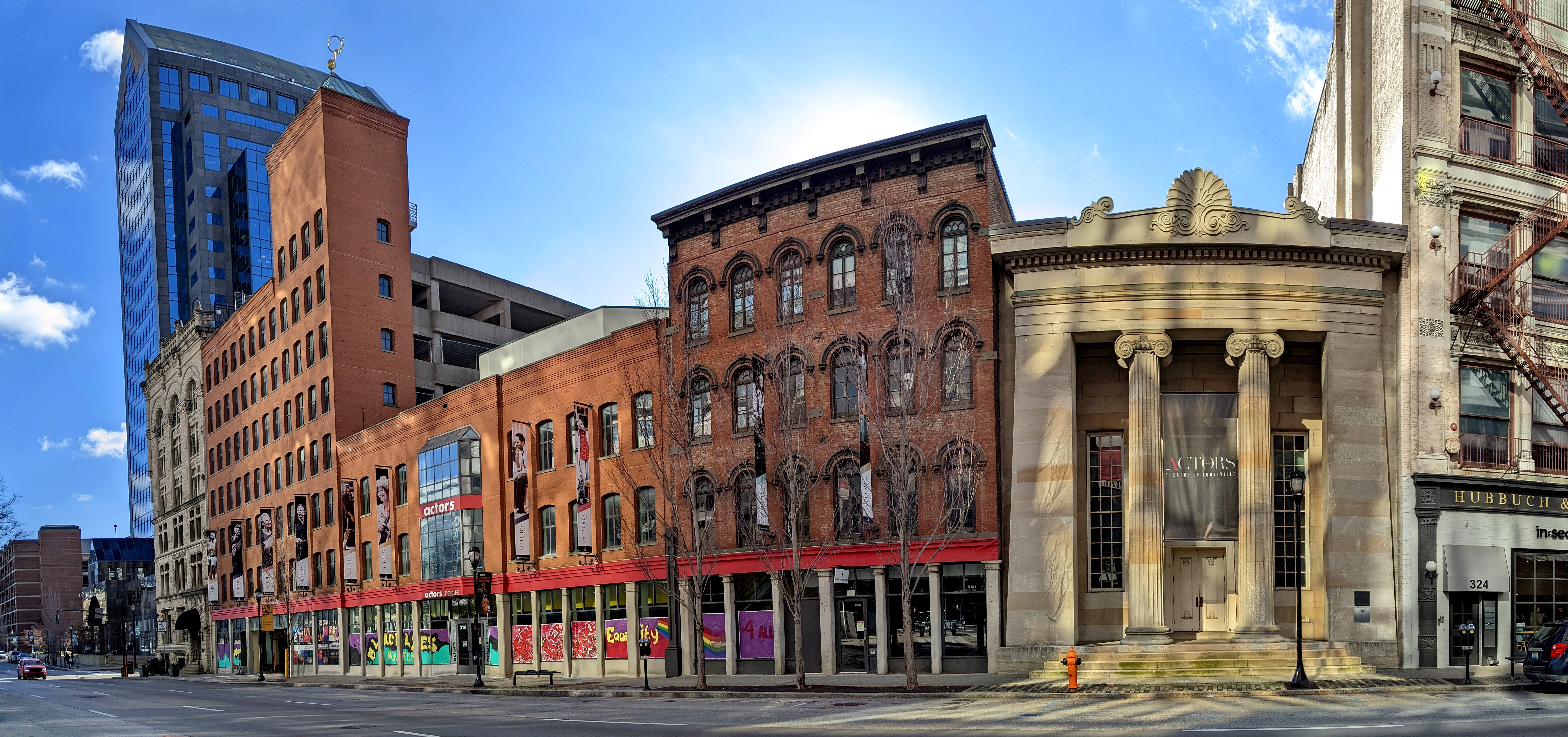
In 1964, Actors Theatre of Louisville was formed through the merger of two fledgling companies, Actors, Inc. and Theatre Louisville, and quickly became a cornerstone of Louisville's cultural landscape.
Active volunteers were an integral part of Actors Theatre's story almost from the very beginning. In 1966, a group of women organized to garner support for auxiliary efforts on behalf of the organization. This committee was the precursor to the Actors Associates, and Sarah Few became the first in a long line of dedicated Presidents who would lead the organization over the decades. Click this link to see a list of all the Past Presidents of Actors Associates.
With the arrival of Producing Director Jon Jory and Associate Director Trish Pugh Jones in 1969, more audience members and volunteers were drawn into the fold. Trish organized "coffee parties" in private homes, where Jon introduced Actors Theatre to small groups, building support for the theatre and its goals. At each, Jon or a staff member spoke of the contribution the theatre would make to the Louisville arts community and how individuals could be part of that endeavor as patrons, donors, or volunteers.
Based on the success of the "coffee parties," Trish began arranging noontime gatherings sometimes referred to as "Ladies Luncheons" for the women who had expressed an interest in volunteering in support of the theatre. These luncheons were platforms for sharing news about the theatre, planning for coming events, and recruiting volunteers for continuing and emerging projects.
By the end of 1969, Actors Associates was organized and operating under the aegis of Actors Theatre. (Stagehands, a similar organization for men, joined Actors Associates at a later date.)
Initially, the working mission of Actors Associates was to provide invaluable services for which the theatre lacked staff or financial resources. Clerical and office functions were early needs. They were quickly followed by the requirements of Actors' Equity Association to provide transportation for actors, housing, and catering for scheduled meals. Ushering performances, conducting public tours, and helping with opening night parties were also service opportunities. Supporting the theatre's work to meet Equity requirements and a changing array of volunteer options continued uninterrupted through March 2020 when the COVID pandemic brought live performances to an abrupt halt for a period of time.
Creating a professional theatre—to say nothing about keeping it going—means change. Changes that bring with them a variety of needs, some financial, some not. Those requiring targeted service or hands-on work often brought with them a call for new, expanded, or modified services. The Associates emerged as particularly adept at redefining, realigning, and reimagining its activities in collaboration with the theatre.
.png)
In Actors Theatre's early decades, change was largely promulgated by longtime leaders, Producing Director Jon Jory and Executive Director Alexander "Sandy" Speer. During his tenure, Jon Jory introduced "Shorts," which later evolved into "The Tens," a series of ten-minute plays; the Humana Festival of New American Plays; and the Apprentice/Intern Company. A parking structure and the Bingham Theatre were added to the theatre complex, and Actors Theatre's endowment fund was established.
As the 20th century turned to the 21st, a leadership transition saw the departure of Jon Jory and the appointment of Marc Masterson as Artistic Director. He would later be joined by Jennifer Bielstein as Managing Director, upon the retirement of Sandy Speer. This administration reset the theatre's financial stability, maintained program quality while rebalancing the number of offerings each season, redefined the work schedules of technicians and craftspeople, and created an Education Department within the theatre. The Education Department initiated workshops in schools, coordinated backstage tours, increased student matinees, established a Teacher Advisory Committee (which some Associates helped to create) to discuss school curriculum and how the theatre's programs could help meet the needs of their students, and offered professional development opportunities for teachers. In addition, the theatre negotiated a long-term commitment for a suite of apartments for artists' housing, and a staff member was assigned to manage the apartments.
During that same chapter, Trish Pugh Jones returned to Actors Theatre in 2003 (rejoining the staff after her original tenure from 1969-1981) and began working with the Associates leadership to revise and codify the Associates' mission, organizational structure, and operational guidelines. As a result, the Associates became self-managing and self-funding and as such, the group raised all funds to support its services to the theatre and set and controlled its own budget.
In addition, a new mission was articulated:
Actors Associates is a self-supporting fellowship of theatre lovers in service to Actors Theatre of Louisville (Actors). While serving Actors, the Associates enrich their own theatre experience, enhance their personal development, and contribute to the continuing success of Actors Theatre.
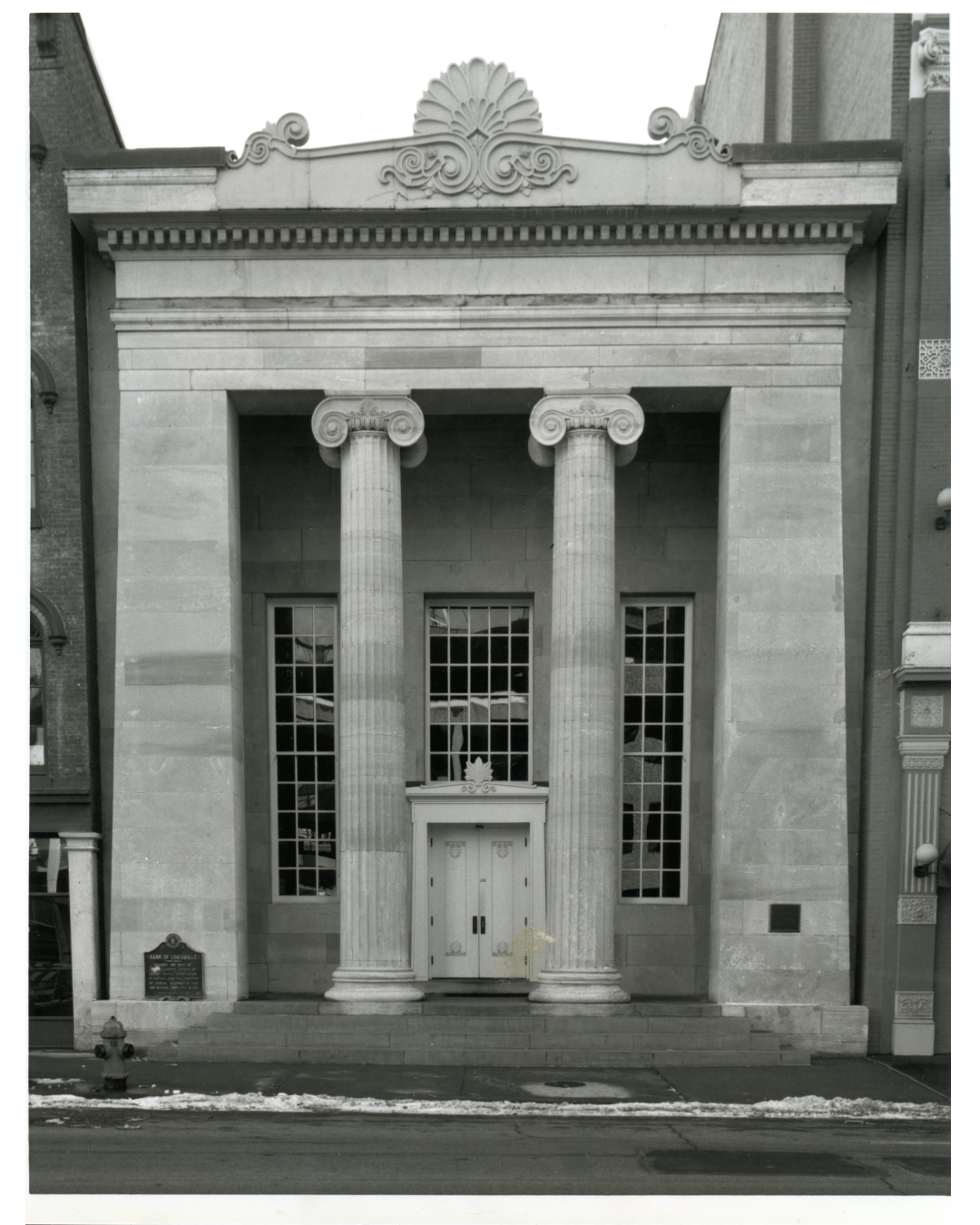
Governance
A governing structure was in place. The Associates Executive Committee included the following:
President
Past-President
Secretary
Treasurer for Income
Treasurer for Disbursements
Communication Vice President
Fundraising Vice President
Fundraising Co-Chair
Hospitality Vice President
Services Vice President
Associates Staff Liaison
Business and planning functions of the Associates were spearheaded by the Executive Committee. The President-Elect was invited to leadership by the theatre's staff, typically the Managing Director, in consultation with the Associates President and Staff Liaison. The Executive Committee met monthly throughout the year, even if the theatre was dark in the summer.
Vice Presidents were chosen by the President. Committee Chairs were active members chosen by the President on the recommendation of past Chairs, other committee members or by personal interest expressed by any member.
Committee Chairs and the Executive Committee met every quarter to learn from the Associates Staff Liaison about ongoing and breaking news about the theatre, and the officers and chairs would report their current and coming services, including volunteer service opportunities in their area.
The Associates also enjoyed a close relationship with the theatre's Board of Directors. The Associates President served as an honorary member of the Board and was provided an opportunity to speak at every meeting and participate fully in its discussions. Board members were invited to become Actors Associates, and some joined as Sustaining Members.
Monthly Meetings and Newsletter
Across the years, Actors Associates evolved and matured as a close-knit community of volunteers dedicated first and foremost to meeting, at the highest level, the requirements set by Actors' Equity, followed by an array of services honoring young playwrights, apprentice actors, and theatre staff. Undergirding the Associates' effectiveness was clear, timely, and consistent communication with the theatre and within Actors Associates. Monthly Meetings and On Cue, a monthly newsletter, were the primary information resources.

Held throughout the ten-month August-to-May theatre season, Monthly Meetings were not only opportunities for Associates to renew friendships, gain knowledge about the theatre, and volunteer for service opportunities, but also to plan activities in response to theatre requests.
By tradition, these meetings began with a social hour, then dinner, a welcome by the President, announcements by the President and Associates Staff Liaison, a Q&A session with a theatre professional, and announcements by committee chairs. The program was often coordinated by the Associates Staff Liaison, who would ask staff members to speak about the upcoming productions or share other behind-the-scenes context.

The Meetings Program Committee, in conjunction with the Associates Staff Liaison, would create a menu. Early on, a team of Associates provided the food; at one point, for each meeting, four or five members would be asked to donate dishes to be shared by 25-30 members. Later on, as this became more unwieldy for the number of participating members, the planning team opted to select a caterer and menu, with a charge for the meal. All effort was made to restrain the cost charged to members.
Members of the Meetings Hospitality Committee would arrive early to dress tables, set up a bar for refreshments, assign tables for service, activity, and membership sign-ups, and collect payment for the meal.
The earliest Monthly ("Ladies Luncheons") Meetings occurred at noon on Mondays.
However, with the passage of time, many active and prospective Associates joined the full-time workforce, making noontime meetings inconvenient or impossible. So, meetings were rescheduled to an evening time slot to encourage more robust participation.
Monthly meetings occurred in the theatre's restaurant, the Sara Shallenberger Brown Lobby outside the Pamela Brown Auditorium, the Mezzanine Lobby outside the Bingham Theatre, and the Victor Jory Theatre lobby.
Beyond announcements at Monthly Meetings, the Associates maintained an internal avenue of communication: On Cue, a monthly newsletter that reported meeting information, opportunities for service, stories about theatre personnel, special events at the theatre, a contact list for members of the Associates Board, and newsworthy items about the theatre and Associates members. On Cue was published each month throughout the August-to-May theatre season for fifty years.
The editor, selected from among the Associates, collected items and worked with the Associates Staff Liaison to format and print the newsletter. Production of On Cue kept up with the times and by the mid-2000s it was produced and delivered electronically to both the Associates and the entire theatre staff.
Actors' Equity Requirements
Providing Housing, Transportation, and Meals were early and continuing bedrock needs of the theatre. The Associates' generous actions to help meet these requirements, and nearly every service they provided, defrayed or reduced costs in several key areas.
Housing
In the early years, when Actors Theatre employed a Resident Acting Company, some actors were Louisville locals; others arrived to join the company in need of housing. In those cases, theatre supporters and Associates offered short-term accommodations in their homes. These arrangements gave actors time to secure longer-term housing.
When the theatre began offering actors who were based in other cities contracts for limited engagements, providing housing was a required provision. The theatre negotiated arrangements to secure apartments in various downtown and Old Louisville complexes and looked to the Associates for assistance in furnishing them.
Legendary among the Associates' early projects was preparing apartments to house the actors and other artists contracted for limited engagements in Louisville. Finding furniture, changing and laundering bed linens, thoroughly cleaning bathrooms and bedrooms, and stocking kitchens with serving dishes and bakeware were part of their task. Associates on a few occasions donated linens for use in the apartments. Sometimes, the Associates even found it necessary to paint an apartment. As a result of these gratis volunteer efforts, the theatre was able to comply with its Actors' Equity housing requirement.
The apartment refresh program and temporary housing continued for years until Actors Theatre negotiated a long-term agreement for a suite of apartments and assigned a staff member as its manager. With the support involved in meeting the housing requirement now covered by the theatre, the Associates turned their attention to volunteering in other areas.
Transportation
The theatre was required by Actors' Equity to reimburse actors for ground transportation as artists arrived or departed the city. As a matter of Louisville hospitality, the scarcity of public transportation and the distance between the airport and the theatre, a different plan was implemented. Each actor was met at their arrival gate by an Associate who provided transportation to a temporary Louisville residence.

Although the meeting point moved farther from the arrival gate with every security update, the fact remained that the first individual an actor or visiting artist met in Louisville was an Associate. For many, that Associate became the face they associated with Actors Theatre.
Similarly, upon departure an Associate would provide transportation to the airport.
Actors' Equity also requires that each actor be provided a Welcome Bag consisting of a few essentials for a first night. Each bag contained, among other items, paper towels, a roll of toilet paper, a small bottle of dish detergent, bath soap, tea, coffee and sugar packets, salt and pepper. The transportation team also contributed a package of cheese crackers, a small chocolate treat, a welcome message from the Associates, and information about Louisville. The bag was a multi-use tote with the Actors Theatre logo, and its contents were donated or purchased by Associates.
Other transportation services included Monday trips to the grocery store and necessary trips to medical or physical therapy appointments or a pharmacy.
Transportation costs were fully funded by the donation of drive time, insurance, and gas by the individual team members.
Associates wishing to participate in the transportation program were screened and approved by the theatre staff prior to acceptance.
Matinee Meals
.jpeg)
The third Actors' Equity requirement involved providing catered meals for actors who, on a given day, performed in both a matinee and evening show. In between, if the break was shorter than two hours, the actors and members of the crew were eligible for a Matinee Meal.
Matinee Meals at Actors Theatre were the homemade hospitality served by the fine cooks of Actors Associates. This long-running initiative evolved as a way to meet the union requirement, and for artists and crew to enjoy a meal without having to leave the theatre complex to find a restaurant. The Associates expanded the participants to include production staff and apprentices involved in the shows so that everyone was provided with a meal—not just Actors' Equity members.
Early on, Associates organized themselves into five or six groups of four to eight team members who would plan, prepare, serve, and clean up after each meal. The meal schedule was dictated by the season's play schedule provided by the Production Stage Manager. Once the Matinee Meals dates were known, the Matinee Meals Committee Chair and Team Captains would confer, assigning teams and projecting serving times based on the runtime of each play. Meals were to be ready when the play ended, lest any delay upset the coming curtain call.
The number of Matinee Meals prepared in a season depended on the number of plays and the number of weeks of performances. Typically, a team would prepare five or six meals a season. Meal size could vary widely from 10 to 40.
The general guide for each meal was salad, meat, two vegetables or fruit, bread, dessert, and drinks such as water, coffee, lemonade, or soft drinks.
Actors and apprentices were asked, upon arrival, their dietary concerns and the Associates would try to accommodate them. Vegetarian options were provided, first on request and then later, they were always available.
Crew Feedings
The theatre's backstage crew also received special accommodations related to their work schedule and especially short-notice changes. Crew Feedings and Midnight Set Changeovers were coordinated by the Matinee Meals Committee Chair. Because the meal tended to be small, only one or two Associates were needed when a meal was requested.
Unlike Matinee Meals, Crew Feedings were lighter lunch-style fare, such as ham and cheese for sandwiches, chili, salad, and dessert.
Crew Feedings and Midnight Set Changeovers were most frequent prior to 2000. At about that time the number of performances and the associated crew work required were reduced, thus freeing the Matinee Meals Committee to assist with other events.
The Kitchen
The first "kitchen" at Actors Theatre consisted of a range accompanied by a shower. In the same room. More than one Associate preparing a meal was visited by an actor seeking or taking a shower.
During this period, most food was prepared at home and heated at the theatre. Meals were served on a shelf in the hallway. Actors and crew ate where they could find a seat.
The kitchen did find a more appropriate home in which meals could be prepared and served. Relocation of the kitchen to a more central location occurred when the parking structure and Bingham Theatre became part of the theatre complex in 1994.
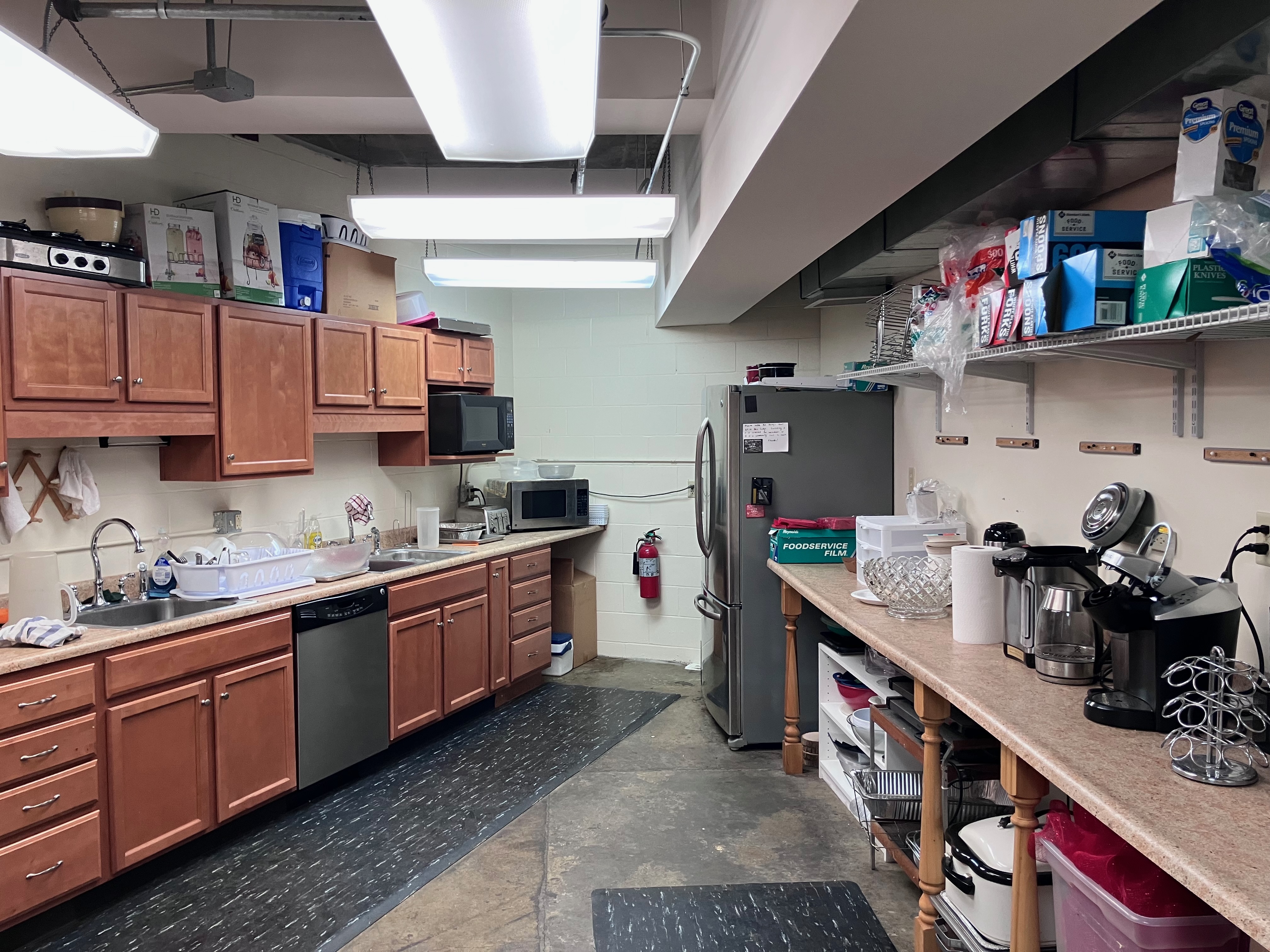
The kitchen was furnished with a range, refrigerator, sink, microwave, storage cabinet, and buffet counter for self-serving meals. Cookware and serving dishes were donated by team members or other Associates. Meals were served on disposable plates and with plasticware.
For each meal, tables and chairs would be set up in the hallway outside the kitchen. Cast and crew could find a seat and enjoy their meal.
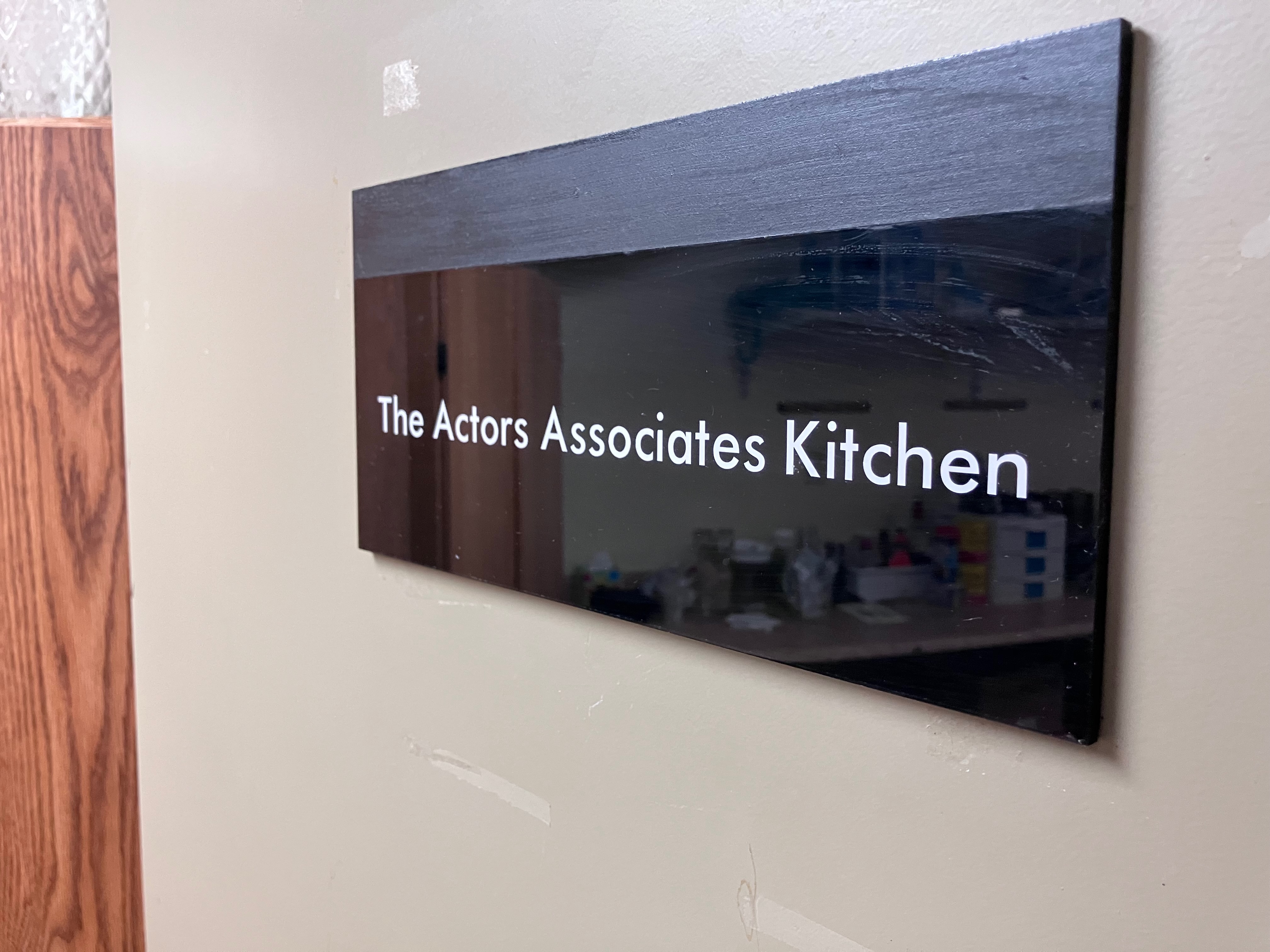
The Actors Associates Kitchen
Around 2000, the theatre launched a fundraising campaign with incentives for selected donor categories. When the campaign ended, the Associates' goal had been met. As promised, the kitchen was officially designated as “The Actors Associates Kitchen.” A commemorative plaque was affixed to the door.
The New Kitchen
In the 2010s, with support from General Electric, the theatre made updates to its newly acquired apartments. Included, at the theatre's request, were new appliances to update The Actors Associates Kitchen. Top-of-the-line appliances were installed. At the same time, a separate gift saw a new buffet serving counter installed.
The facelift of the kitchen prompted other updates. The Associates purchased Corelle plates, bowls, and saucers to replace the previously used disposable ones; new knives, forks, and spoons replaced the plastic ones. These additions were both eco-friendly and cost effective and were greatly appreciated by the many actors and crew who
used them.
The Humana Festival Hospitality Kitchen
The Humana Festival of New American Plays was the premier event of its kind in the nation, drawing theatre lovers, journalists, and film and stage producers from around the world. About 36,000 patrons attended five weeks of plays and associated events. It culminated in Industry Weekends with new plays and one-of-a-kind events.
The final two Industry Weekends were abuzz with activity, and all hands were on deck. Actors Associates were right in the mix: transportation runs were at an all-time high; the Gift Shop was open for business morning, noon, and night; Associates filled in as ushers; and staff members worked long hours in the theatre building. Amid this activity the Matinee Meals Teams opened the Humana Festival Hospitality Kitchen, creating an all-day quiet oasis of non-stop food service from 10 a.m. to 8 p.m. on Saturday and Sunday. Each day was coordinated by a Matinee Meals Team, supplemented by other volunteer workers. Each team planned its own version of Golden Corral, and decided which items would be reimbursed from the Associates budget and which items would be donated by team members. All Associates were encouraged to contribute additional items to the Humana Festival Hospitality Kitchen.
Throughout the day, actors, crew, staff, and volunteers who came to visit were treated to an ever-changing feast. At any time, crockpots, bowls, platters, and trays could be filled with soups, tossed salad, potato salad, chili, fruit, mac and cheese, lasagna, baked beans, cornbread, and sweet rolls, brownies, cookies, cakes, and pie.
Occasionally the Humana Festival Hospitality Kitchen schedule included specially requested meals for the Apprentice Company as they practiced for their Festival show, or for a department scheduled for a full day of work. These events were not typically handled by a Matinee Meals Team, but rather another committee. Requests to use the kitchen were agreed to by the Matinee Meals Chair.
Humana Festival Grilled Cheese Station
For many, the highlight of each day occurred from 12-2 p.m. when the Associates prepared made-to-order grilled cheese sandwiches for all who came. Customers could choose the types of bread and cheese as well as add-ins such as ham, turkey, and spinach. An Associate would assemble the sandwich and pass it on to the grill masters. When golden brown, the sandwich would be delivered by a runner. On many days, 50 to 80 sandwiches would be prepared.
A second highlight of the day came late in the afternoon: the presentation of the banana pudding. Those in-the-know hovered near the kitchen around 4 p.m. Some would wait with a bowl and spoon in their hand for that one large pan of banana pudding to arrive. It seldom lasted more than 20 minutes.
The Grilled Cheese Station was located in the basement hallway past the Associates Kitchen. The banana pudding would be placed in the hallway by the kitchen.
Fundraising
.png)
While the Associates helped the theatre avoid many costs associated with meeting Actors' Equity requirements, the theatre faced other unavoidable costs associated with its operations. To address that circumstance, the theatre organized sales of play scripts, theatre-related books, logo items, and T-shirts to generate funds for the theatre. Associates were tasked to be the front-facing sales representatives for the theatre. A "sales table" was scheduled concurrent with the productions of Dracula, A Christmas Carol, and the Humana Festival of New American Plays.
Other sales events included Les Boutiques de Noel, an off-site Christmas bazaar, and scheduled costume sales and prop auctions. Proceeds from these sales went to the theatre and a portion returned to the Associates.
With the implementation of its Operating Guidelines, the Associates gained responsibility for self-funding, initially through "sales table" sales.
Over the next ten years the already seasonal "sales tables" were transformed, by the Associates Fundraising Committee, into a Gift Shop with the cash flow of approximately $50,000, similar to a small business.
The name change from "Sales Table" to "Gift Shop" reflected not only an attitude change, but also a major step into the world of digital processing. A programmable cash register was purchased to record sales and monitor tracking of sales and inventory; lock boxes secured cash between deposits; and SignUp Genius enabled Associates to choose a work shift or shifts at each Gift Shop. Each Associate was asked to work one three-hour shift during each scheduled Gift Shop.
Merchandise options were increased to include currently popular scarves, socks, pop-up cards, candles, seasonal and consignment items, and Actors Theatre logo-bearing mugs, T-shirts, baseball caps, beanies, ink pens, and tote bags. There were note cards with an ink drawing of the historic building's Main Street facade. A late addition to available items—small bottles of water—quickly became the fastest-selling item.
"Eye-catching" became a watchword among the Associates. The first challenge was to draw attention to the originally allocated space in the far corner of the lobby. To that end, a small, lighted display and storage cabinet was designed by an Associate and constructed by Actors Theatre's Properties staff. It supplemented the lone table that had been used for years as the display area. Next, a large counter with a glass top and sides was donated. Finally, commercial display towers, rounds, and racks were purchased to increase visibility of sale items. On occasion, the theatre's large bookcases expanded the display area.
The Gift Shop's schedule revolved around the theatre's most-attended productions.
Dracula's Den was open just before and during Dracula. It offered T-shirts, logo items, and Halloween-themed curios near the Bingham Theatre entrance.
Cratchit's Corner paired with A Christmas Carol, offering a selection of holiday items including ornaments, toys, and peppermint sticks, a longtime favorite of the theatre's patrons. If ever the peppermint sticks ran out, audience members made it clear that the candy had achieved near iconic status and had become a reason to attend Actors Theatre's A Christmas Carol.
Peppermint sticks and small, cool bottles of water were primarily sold during intermission. Those sales were made in an area adjacent to the Gift Shop proper.
The Humana Festival Bookstore traces its roots to the earliest Humana Festival when scripts and selected books were chosen by the theatre and sold by Associates. Sales items expanded over the years to include T-shirts, Humana Festival posters and postcards, and miscellaneous small items. The books were selected by the theatre and sold on its behalf.
Across all gift shops, information was perhaps the most valuable commodity. Associates staffing a gift shop fielded questions such as:
"Where is the Victor Jory Theatre?"
"Where is the bathroom?"
"What is a good place to eat?"
"Which play or plays do you recommend?"
As they answered these questions, and in every Gift Shop interaction, an Associate represented the theatre and became the face of Actors.
Prop Auctions and Costume Sales
Actors Theatre and Actors Associates collaborated to orchestrate periodic sales of props and costumes to the public. These events were a grand way to share unique, often hand-crafted items from past productions with the Louisville community, to clear out much-needed theatre storage spaces, and to bring in funds to support the theatre. The Costume Sales, conducted with assistance from Associates, benefited the Costume Department, and in later years, the Prop Auction was designated as a fundraiser for the Associates.
Backstage Tours
In the early years, the Associates organized a Theatre Tours Committee that conducted public tours of Actors Theatre, and some members became dedicated tour guides. Tours were sometimes held in conjunction with events in the building, and at other times they were specially planned for school or community groups who were interested in understanding what happened behind the scenes.
Above and Beyond Required Service
The Apprentice/Intern Company
The Professional Training Company
The Apprentice/Intern Company was created in the 1971 season and was reimagined as the Professional Training Company in 2016. Each year, approximately 20-22 competitively selected, aspiring actors became Acting Apprentices, spending a season at the theatre to learn their craft and prepare to enter the professional ranks. Alongside these performers, a cohort of around 15-20 Interns were selected to receive hands-on educational experience and mentorship. The Interns (later named Apprentices) applied to train in their areas of interest throughout its administrative, artistic and production departments. As a whole, the Company worked in their respective roles to produce a season of their own projects tailored to create opportunities for learning and collaboration.
The Professional Training Company evolved in 2016 with a similar size and purpose, reflecting the staff's ongoing efforts to strengthen its educational components and evolve its projects and practices, work that continued until the program's final season in 2020-21.
While the theatre delivered a strong learn-by-doing professional education, the Associates worked to make Actors Theatre a home away from home.
The Apprentice/Intern Committee planned and scheduled these activities to be joined by other Associates who were eager to contribute food and be part of the following events.
The first meeting of the incoming company was a "Welcome Dinner" at the theatre. For that event, the Associates provided meat and drinks; individual Associates provided salads, vegetables, and desserts for one of their widely acclaimed "potluck" meals.
The evening program was conducted by the Apprentice/Intern Company's director, officially welcoming the company to the theatre and noting the ongoing support that the Associates would offer throughout the season. Brief introductions were given by company members and Associates alike. The final order of business was a few instructions by the program's director, who announced the time company members were to report the next day for orientation.
A similar "Farewell Dinner" marked the season's end. It was an opportunity for company members to share experiences of the theatre, and their plans for next steps. It was also a time for the Associates to wish company members a stellar future. Each "graduate" received a commemorative gift, usually an Actors Theatre logo mug and other items.
Associates hosted other gatherings for the company. Labor Day, for example, would be celebrated with a picnic at a local park. Meat, drinks, cornhole games and other activities were provided by the Associates. This popular event attracted apprentices, Associates, and actors preparing for the first show of the season.
Morning "Solo Mio" and "by invitation" performances that were part of the company's season of projects would be followed by an informal breakfast or afternoon reception.
Lunch would also be provided when the company was scheduled for a full work or practice day for the "Apprentice/Intern Show" during the Humana Festival.
By tradition, the Associates hosted a reception following the opening of the New Voices Young Playwrights Festival, for which the Professional Training Company (Apprentice/Intern Company) were the actors, costumers, light and sound technicians, stage managers, and other professional roles. Actors Theatre staff members and interns served as directors and dramaturgs.
This reception was largely a collaboration between Education and PTC (A/I) Committees and Actors Theatre's Education Department which produced the Festival, with the plays developed during the theatre's New Voices residencies with local schools. Long before rehearsals began, some Associates also contributed to the play selection process by helping to read scripts that were submitted for the Festival each year, written by hundreds of middle and high school students from Kentucky and Southern Indiana. On the Festival's opening night, Associates dressed the tables and provided plates, napkins, soft drinks, and limited finger food. Fruit and vegetable dishes, as well as sweet and salty snacks donated by individual Associates, filled the tables to feed the audience. Associates not only hosted the party to celebrate the student playwrights, casts and production teams, but also provided ushers for Festival performances.
For many Associates, the best part of extending hospitality to the young professionals occurred when they reunited one year later at the next Humana Festival. If connections were not made during a reunion meeting, returning alumni came to the Humana Festival Hospitality Kitchen, which became the gathering spot for Associates, former apprentices and interns, playwrights, and visiting artists alike.
Ushering at Student Matinees and Throughout the Building
Throughout the season, selected, age-appropriate productions were offered during school hours to middle and high school students. Actors Associates formed a committee to organize ushering support for these Student Matinees, and members assisted the theatre's Customer Relations Director and Associates Staff Liaison to move students on and off their buses and into their assigned theatre seats. These field trips were part of the theatre's outreach program coordinated through its Education Department.
For many seasons, Actors Associates was responsible for ushering in the Victor Jory Theatre, and had a committee dedicated to this purpose. Over the years, even though ushering was not mandatory for Associates members, many Associates became active ushers throughout the theatre spaces.
To learn about Actors Theatre of Louisville's current Learning and Creative Engagement programs, click here.
Actors Associates Play Discussions
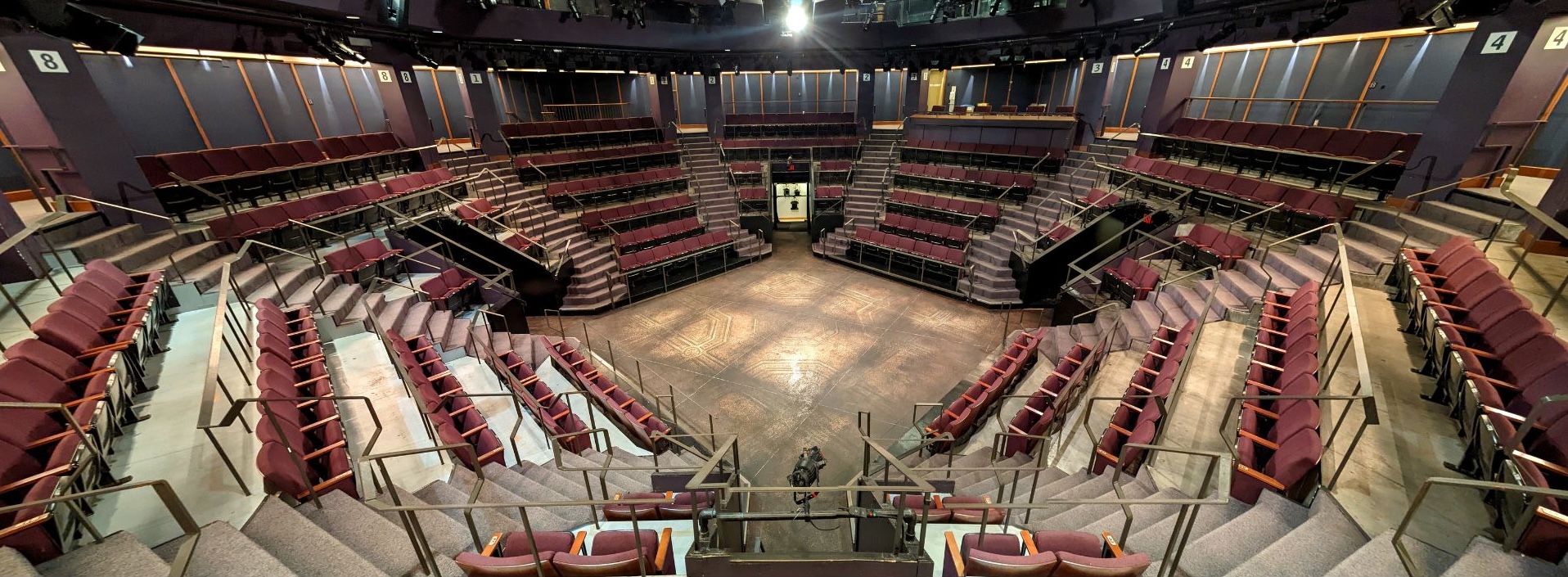
Play Discussions were hosted throughout the season by the Associates' Education Committee in cooperation with the theatre's literary staff. Held on selected evenings, these moderated conversations featured a panel of dramaturgs discussing past and upcoming productions, with Associates sharing their questions and experiences of the art onstage.
Executive Initiatives

The Executive Committee, under the revised Operating Guidelines, worked closely with the Associates Staff Liaison to identify continuing and emerging services important in the coming season, allocating and monitoring funds for their completion.
In advance of each season the incoming President conducted a planning session with the officers and committee chairs to review expectations and funding for the year ahead. The materials provided during the session included Operating Guidelines, Committee membership lists, the membership directory, list of Past Presidents, projected calendar of events, and reporting and reimbursement requests.
Although direct services were primarily provided through the committee structure, the Executive Committee did exercise responsibility for selected activities. Many were made possible by the income-generating success of the Fundraising Committee and the Gift Shop. These included the following:
Jennifer Bielstein Recognition
Actors Theatre recognized the accomplishments of Jennifer Bielstein, and her influence as Managing Director. The Jennifer Bielstein Leadership Fund was established in her name. The Associates donated $500.
African American Art Exhibition
Actors Theatre became the host of the African American Art Exhibition in the late 1990s when its former space became unavailable. This juried show was not a performance event, yet the Associates showed support by donating a financial award of $500 to a winning artist. When requested, Associates also served as docents.
Reporting to the Board of Directors
Following each Humana Festival, the President reported highlights of the year to the Board of Directors. Always of interest was the value of volunteer hours. Had those service hours been purchased at the prevailing rate they would have reflected a direct cost to the theatre. In 2018-19, the last full year of operation, that estimate suggested a cost deferral of $500,000.
Staff Appreciation Luncheons
Staff Appreciation Luncheons provided hospitality for individual administrative departments across the theatre, much like that provided to actors, crew, and the apprentices and interns. The luncheons followed the Matinee Meals model and were held outside the Associates Kitchen.
Executive Committee members provided homemade dishes, decorated the tables, and provided a favor for each guest—often an Actors Theatre mug and a package of peppermint sticks. Many staff members reported how touched they were to be acknowledged and included in an Associates hospitality event.
Gift Shop Upgrades
With the evolution of 21st-century technology, the Associates significantly upgraded the Gift Shop's equipment, including a new cash register and associated digital sales and inventory tracking capabilities that transformed its operations.
Advocacy
Actors Associates were faithful advocates for Actors Theatre and were encouraged to inform family and friends about the theatre, demonstrate community support for the theatre in public and governmental settings, and participate in state-level arts agencies' meetings.
C.A.V.O.R.T.
Actors Associates has long had a national presence as a member of C.A.V.O.R.T.—Conference About Volunteers of Regional Theaters. Several Associates have held prominent positions on the C.A.V.O.R.T. Board of Directors, including serving as President.
Until 2020, C.A.V.O.R.T. members gathered at a theatre-member conference site every two years to learn about the host theatre and its volunteer program in-depth, to attend plays in the host city, and to share volunteer strategies among theatres. These conferences were often hosted by a theatre located a considerable distance from Louisville. Actors Associates offered partial support to members wishing to attend the conference. Funds budgeted for this purpose were equally divided among those who applied for assistance.
The C.A.V.O.R.T. national conference was hosted in Louisville and by Actors Associates in 1996 and again in 2016. Members of Actors Theatre's staff willingly shared their time and expertise for the concurrent sessions, spoke at receptions and luncheons, and generally welcomed volunteers from other regional theatres across the country. They took the opportunity to publicly share their appreciation of one of their key stakeholders: Actors Associates. Volunteers from other regional theatres left the 2016 conference recognizing the value of the collaborative relationship between Associates and Actors Theatre and confident that Actors Theatre had discovered the key role volunteers bring to the success of their enterprise.
As with so much else, 2020 saw the hiatus of theatre activities across the country, including upcoming C.A.V.O.R.T. conferences. In recent years, C.A.V.O.R.T. has restructured its mission and operation with Actors Associates participating in discussions around that organizational evolution.
The Face of Actors Theatre
It has been suggested that the first person an actor arriving in Louisville saw was an Associate. Similarly, that actor, looking for their first Matinee Meal, would meet an Associate. A patron perusing items at the Gift Shop would be assisted by an Associate, or they might have been seated in the theatre by an Associate. During each of these interactions, Associates proudly wore name badges identifying them as "The Face of Actors Theatre."
Who Were the Associates?
Actors Associates were women and men who recognized the value of professional theatre in their lives and the broader community. AND, they were ready to support Actors Theatre by contributing their time and skills to the betterment of the theatre.
In 2020, the Associates roll reached 100. Each year a few members joined, a few did not renew, but the majority returned, ready to volunteer. Several Associates had been active members since the 1960s.
Among the Associates were homemakers, teachers, an educational consultant, physicians, business owners, a Harlan Sanders impersonator, accountants, a college administrator, and so many more professions and life stories represented.
The group also welcomed cross-generational connections, such as a young Actors Theatre usher who came to Associates meetings with her father. High school students became involved in Actors Theatre through their parents, and vice versa, passing a spirit of volunteerism and love of live performance through the generations.
Actors Associates could join as either Active (individual or family) or Sustaining members. Membership dues for Active members were set with the expectation of participation in at least one committee and working at least one shift at each Gift Shop.
2020 and Beyond
As 2020 approached, there were more changes at Actors Theatre, including shifts in executive leadership. Artistic Director Les Waters (2012-2018) and Managing Director Jennifer Bielstein (2006-2016), who had worked closely with the Associates, departed the organization for new opportunities, and Robert Barry Fleming took the helm following Waters' departure, becoming Executive Artistic Director in 2019 (serving through early 2025).
The 2019-2020 season started with the excitement of a new season beginning, followed by growing anticipation of the Humana Festival of New American Plays. Requests for Associates to meet arriving actors and visiting artists were increasing, the Humana Festival Kitchen was ready to open, and the Gift Shop was stocked and ready to welcome its first customer.
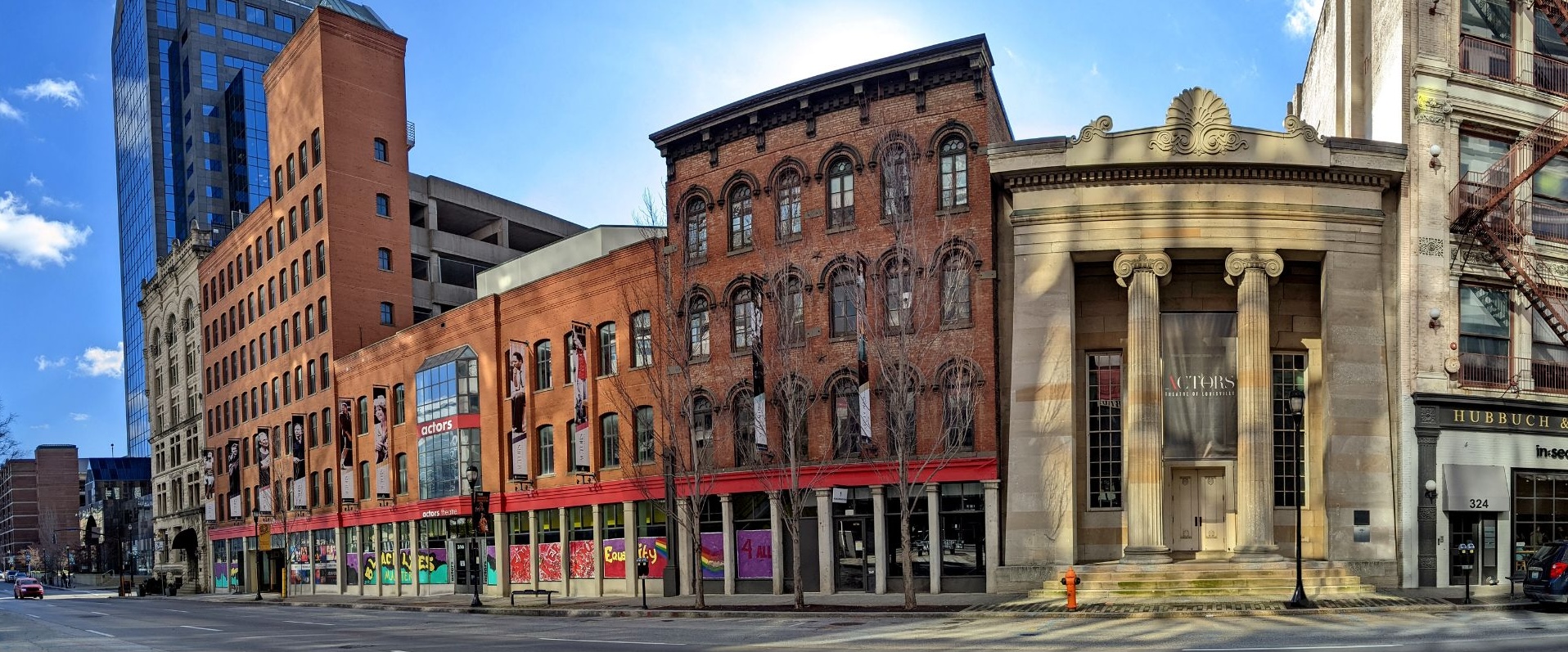
Then on March 12, the COVID pandemic reached Kentucky. That evening, the 2020 Humana Festival of New American Plays was cancelled, the Associates, patrons and artists left the building, and Actors Theatre began reimagining itself in a new world. Fleming began experimenting with virtual technology to continue sharing stories during the long pause in public gatherings. In the seasons that followed, Actors Theatre navigated the historic disruption, welcomed audiences back to its theatres on Main Street, and has entered a new era with new leaders—Artistic Director Amelia Acosta Powell and Managing Director Emily Tarquin. After successfully launching their tenure with a stellar first season, their work continues to envision the organization's future.
The Associates also were considering their future. In 2020 few, if any, members were prepared for or wanted to walk out of 50 years of volunteer effort supporting the theatre, 50 years of camaraderie, or 50 years well-lived in community.
While the Actors Associates' institutional structure under the auspices of Actors Theatre ended during the pandemic, its decades of meaningful impact and generous communal spirit remain. In 2024, Actors Associates donated a substantial financial gift to Actors Theatre, continuing the legacy of its stewardship. As of this writing in 2026, Actors Associates meet periodically to share a meal; enjoy a program about one of Louisville's local theatres, including Actors Theatre, where some Associates have begun to reconnect; and create more memories of the family they became.
Dear Reader,
Thank you for reading Our Story. We wish for you the opportunity to find a community-focused organization—perhaps even the evolving Actors Theatre of Louisville, under its new leadership—that is worthy of your investment as a volunteer.
Sincerely,
Actors Associates
Actors Theatre of Louisville
Actors Associates Story Circle Event
On April 20, 2026, members of Actors Associates gathered to reminisce and share stories about their experiences as part of this remarkable community of volunteers. Organized to celebrate and commemorate Actors Associates’ long history of service to Actors Theatre of Louisville, this Story Circle event created space to reflect on the group’s impact on the theatre, on the artists and apprentices they welcomed, and one another. Watch this video of selected moments and memories from their conversation, and learn about the legacy of these dedicated arts advocates.